1. What is a steel hardness converter and how does it work?
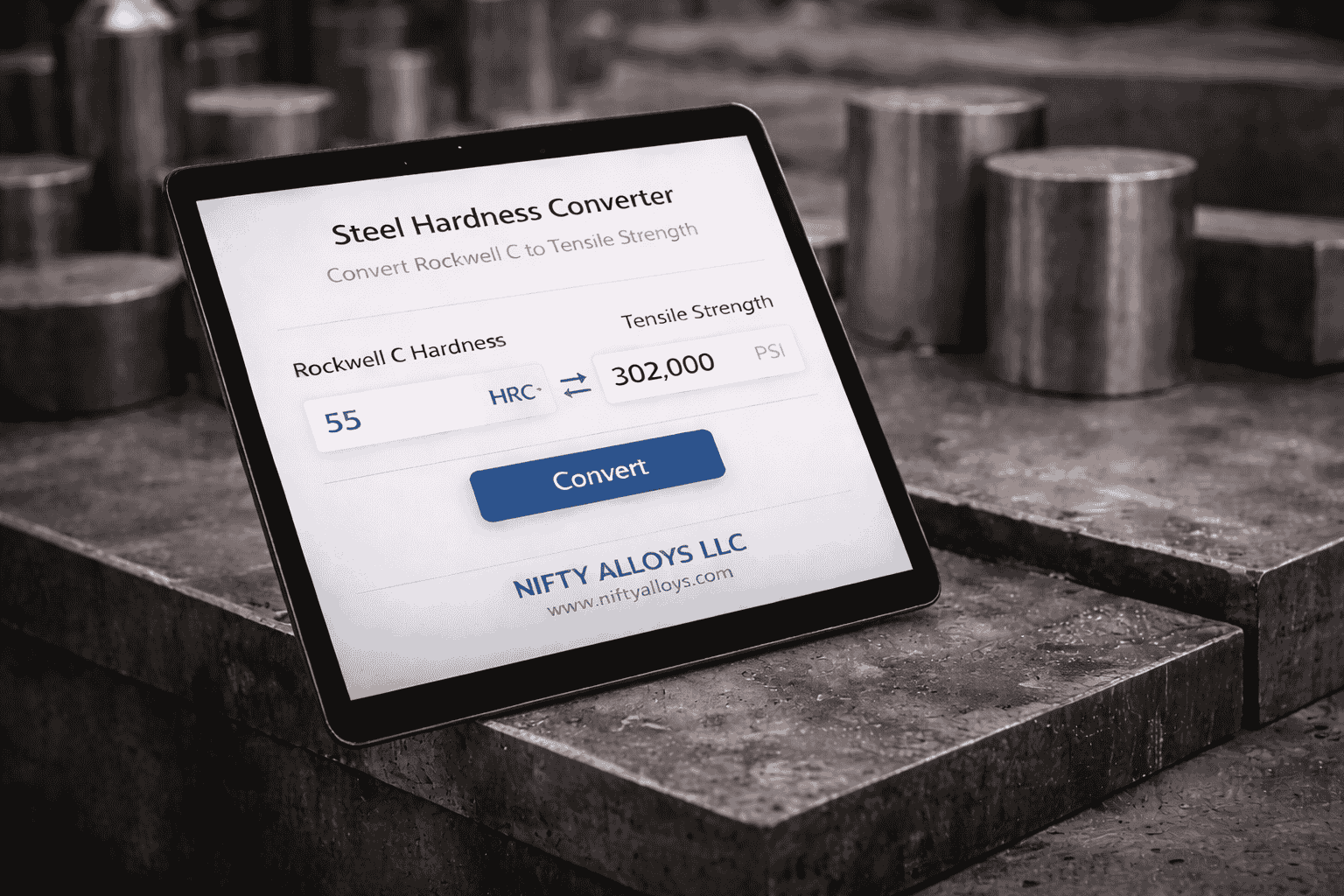
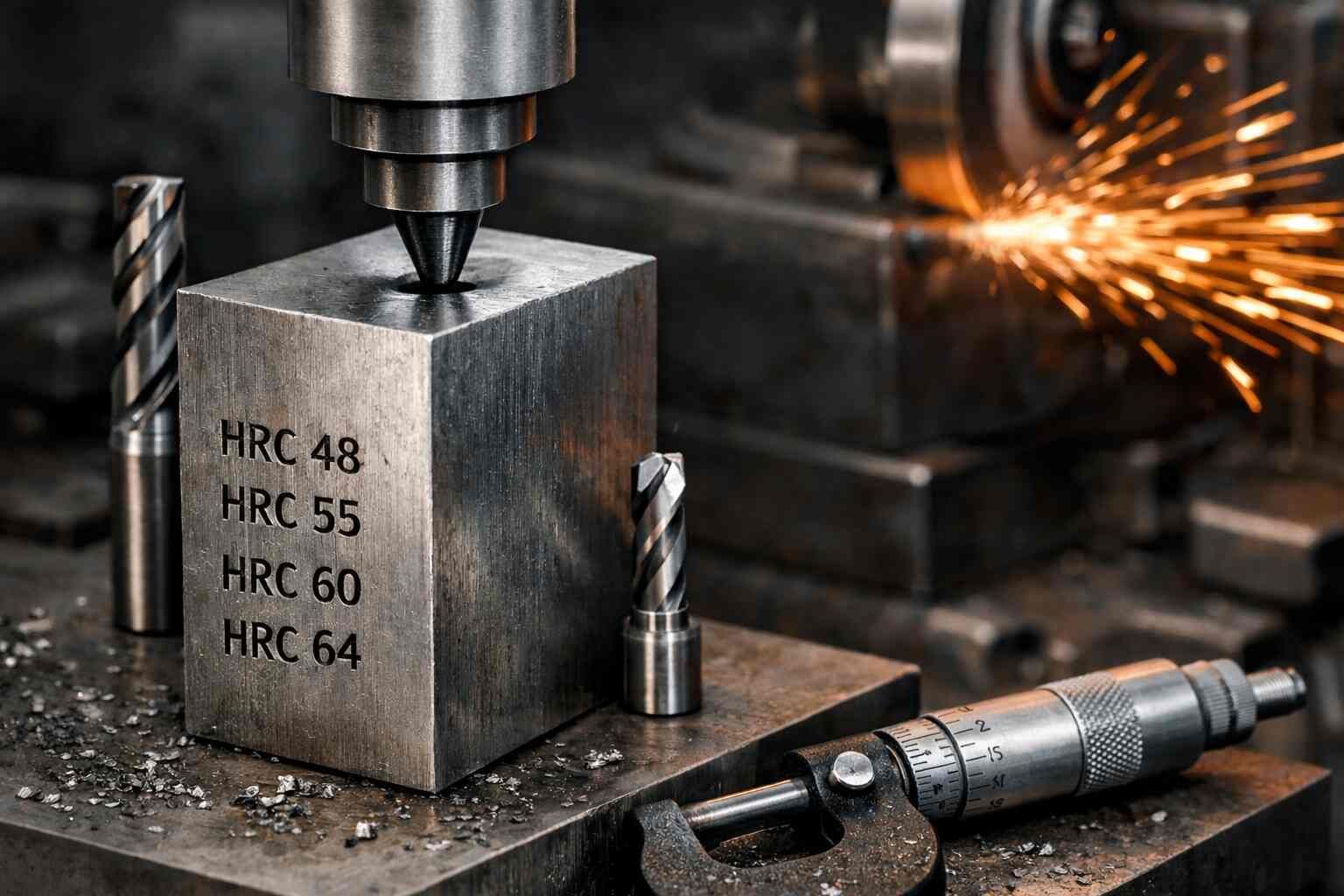
A steel hardness converter estimates equivalent values between hardness scales (HRC, HB, HV) using empirical correlation tables, not direct formulas.
2. How do you convert Rockwell C (HRC) to tensile strength?
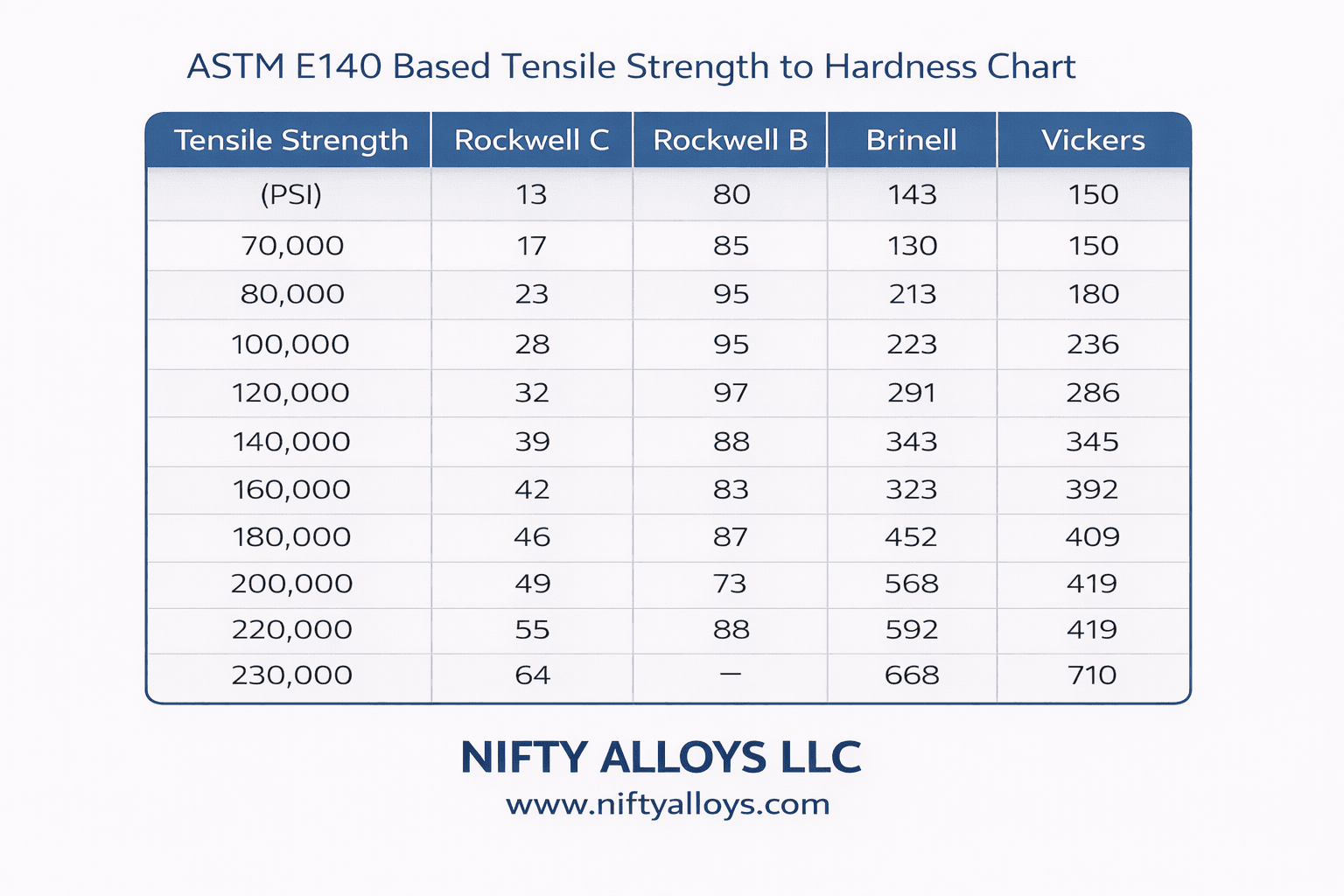
HRC is converted to tensile strength using ASTM E140 correlation charts, mainly for carbon and low-alloy steels as an approximation.
3. What is the most accurate HRC to BHN conversion method?
The most accurate method is using ASTM E140 or ISO 18265 tables, combined with knowledge of the steel grade and heat treatment.
4. Are hardness conversions based on ASTM E140 accurate for all steels?
No. ASTM E140 is not universal. Accuracy decreases for stainless steels, tool steels, nickel alloys, and non-ferrous metals.
5. How can I use a steel hardness calculator Excel sheet for quick conversions?
Enter the known hardness value, select the scale, and reference ASTM-based lookup tables embedded in the Excel sheet for fast estimates.
6. What’s the difference between Brinell (BHN), Vickers (HV), and Rockwell (HRC) hardness tests?
- BHN: Large ball indenter, bulk materials
- HV: Diamond pyramid, thin or precise samples
- HRC: Cone indenter, hardened steels
7. Can I convert hardness to tensile strength for stainless steel and tool steels?
Yes, but only as an approximation. Stainless and tool steels show greater variability due to alloying and heat treatment effects.
8. What is the formula to convert KSI to HRC?
There is no direct formula. Conversion from KSI to HRC relies on empirical charts, not mathematical equations.
9. Is there a reliable online hardness conversion calculator for engineers?
Yes. Engineering portals, ASTM-based calculators, and materials databases provide reliable conversion tools when used within their limits.
10. How do hardness values relate to heat treatment and material strength?
Heat treatment directly affects hardness. Higher hardness generally indicates higher strength, but reduced ductility.
11. Can I use these conversion tables for Inconel or titanium alloys?
No. ASTM E140 tables do not apply reliably to Inconel, titanium, or aluminum alloys. Use alloy-specific data instead.
12. What are the limitations of using ASTM-based hardness conversion charts?
Limitations include material dependency, heat treatment variation, surface condition effects, and non-applicability to exotic alloys.
13. Why do hardness-to-strength conversions vary across alloy types?
Different alloys have different microstructures, strengthening mechanisms, and responses to heat treatment, affecting correlations.
14. How can I check hardness conversion in Excel using BHN and HV values?
Use ASTM E140 reference tables, apply lookup functions, and clearly label results as estimated equivalents.
15. Which standard governs steel hardness conversion testing: ASTM E140 or ISO 18265?
Both are valid. ASTM E140 is widely used globally, while ISO 18265 is preferred in EN-based and European applications.